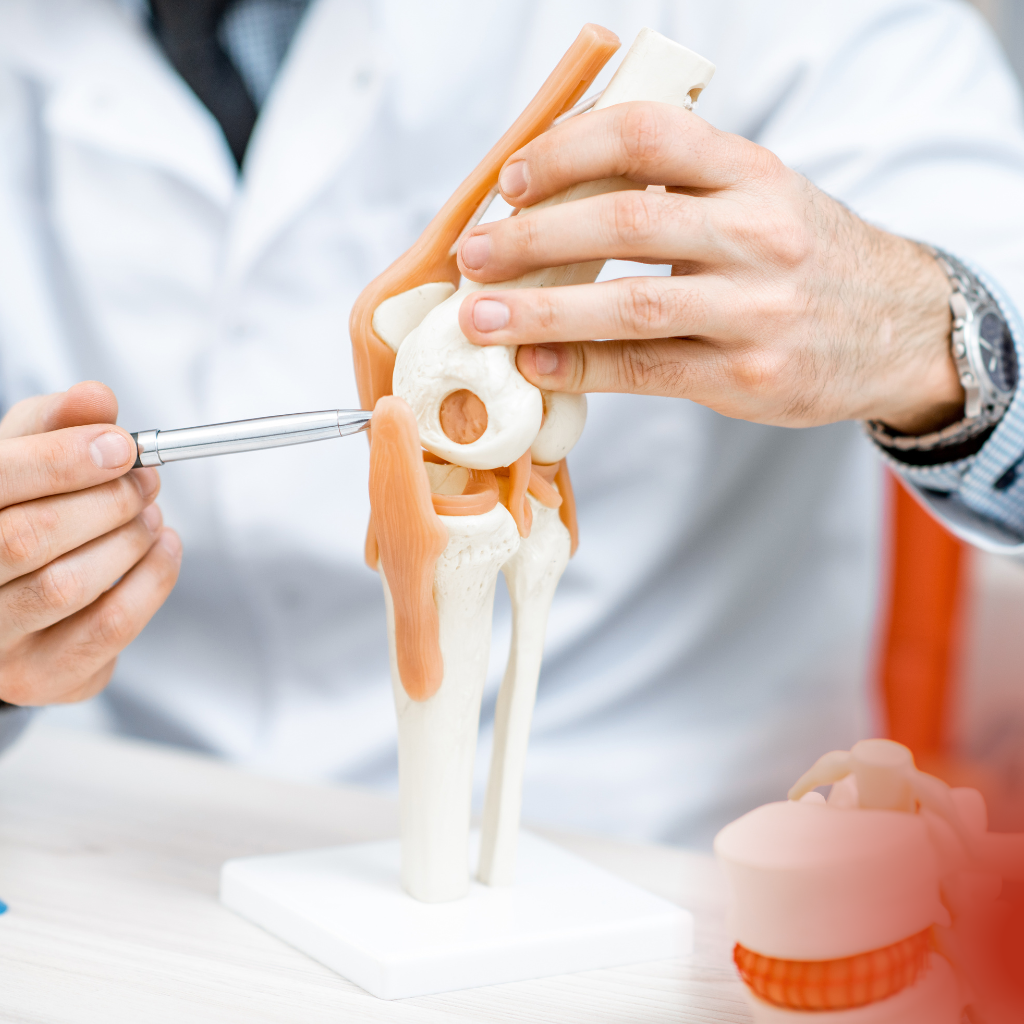


Total hip arthroplasty, commonly known as total hip replacement, is a surgery performed to replace or renew the damaged hip joint in individuals with advanced osteoarthritis or significant joint damage. This surgery has a history of approximately 70 years. Thanks to significant advancements in technology, surgical techniques, and materials, it has reached its modern form today.
In which conditions is total hip replacement used?
Primarily, it is a surgery performed after middle age, but there is no upper age limit for this operation. It can be applied to anyone who has completed or is close to completing bone development, depending on the indication. Particularly, in cases such as developmental hip dysplasia (hip dislocation) or avascular necrosis (blood supply problems of the femoral head), it is a definitive solution for young people between the ages of 20-40, providing excellent outcomes by relieving pain, limping, and shortening issues. Generally, total hip replacement is applied in cases of osteoarthritis, hip dislocation, childhood conditions like slipped capital femoral epiphysis, rheumatic diseases, infection sequelae, tumors, advanced age hip fractures, and bone necrosis following blood supply problems. Individuals with these conditions who have not benefited from non-surgical treatments, or are not expected to benefit, are candidates for hip replacement surgery.
How is hip replacement surgery performed?
• If the patient does not have an active infection (such as a urinary tract, throat, or dental infection), blood samples are taken for surgical preparation, and an anesthesiologist is consulted.
• If there are no contraindications, the patient is admitted to the hospital either on the day of surgery or one day before.
• Diabetes and hypertension are not obstacles for this surgery but must be kept under control.
• Smoking is not recommended as it increases the risk of infection.
• The surgery can be performed either under general anesthesia or with regional anesthesia, where the patient remains awake.
• A skin incision of 10-20 cm is made on the hip, depending on the surgeon’s preference.
• After removing the damaged bones and placing the prostheses, the capsule, muscles, fascia, subcutaneous tissues, and skin are sutured.
• Post-surgery, the patient is transferred to their bed in the ward.
• Approximately 4-6 hours after surgery, patients are allowed to eat normally.
• Patients are mobilized with support on the evening of the surgery or the next day.
• During this period, patients must use compression stockings and a walker.
• The wound dressing is changed every two days.
Frequently Asked Questions About Hip Replacement Surgery
What are the symptoms of patients who are candidates for total hip replacement?
Severe pain is the most common symptom. Initially, the pain occurs while walking, but over time it can also occur at rest and even during sleep at night.
- Limited range of motion
- Limping
- Leg shortening
These are other common signs and symptoms.
What are the risks of delaying hip replacement surgery?
Non-surgical treatments such as medication, physical therapy, joint injections like PRP or stem cell therapy, and using a cane may be applied depending on the patient’s condition. However, surgery should not be delayed in patients who need it, as delaying treatment increases the risk of severe osteoarthritis and degeneration in the healthy knees, the other hip, and even the lower back and spine. Delaying surgery may also increase the likelihood of needing surgery on these other areas in the future due to increased strain.
Can stem cell therapy be used instead of hip replacement surgery?
It is especially important to carefully select patients for stem cell therapy. In cases where hip replacement surgery is definitively needed, stem cell therapy cannot prevent the need for this surgery. However, it may be applied to selected cases after explaining the objective outcomes to the patient.
Is there an age limit for hip replacement surgery?
Although it can be considered in early adulthood in special situations, it is primarily a surgery performed after middle age. There is no upper age limit for this surgery, and it can be performed on anyone who has completed or is nearing the completion of bone development, depending on the indication.
Who is not suitable for hip replacement surgery?
Contrary to popular belief, this surgery can be successfully performed on young women who may want to become pregnant in the future. However, it is not suitable for the following individuals:
- Those with poor personal hygiene, dementia, or mental illness
- Individuals with an active infection in the hip
- Those with severe arterial or venous insufficiency
- Patients with muscle paralysis around the hip due to neurological conditions
Additionally, if the surgeon lacks experience, the healthcare facility lacks proper conditions, or the highest-quality implants are not being used, hip replacement is not recommended.
What are the types of total hip replacement? What is the structure of the prosthesis?
Modern prostheses have primary components that fit into the femur and pelvis, which are made of chrome, cobalt, or titanium. The intermediate components at the joint surfaces can be made of ceramic, polyethylene, or metal. For example, when ceramic hip prostheses are mentioned, it means that the intermediate components are made of ceramic, while the primary parts fitting into the bones are metal. These components are fully compatible with the body.
Who gets cemented vs. uncemented hip replacements?
Uncemented hip prostheses are often used in younger patients, where the prosthesis is tightly fitted to the bone, and the patient’s bone grows onto it to ensure strong fixation. In elderly patients with poor bone quality, the prosthesis is fixed to the bone using a special filler called bone cement. Cemented prostheses are also preferred in younger patients whose bone structure or anatomy is unsuitable. When done properly, the results of cemented prostheses are similar to those of uncemented ones.
How long does a hip prosthesis last?
When performed by an experienced surgeon in a quality facility with high-quality materials, a hip prosthesis is expected to last a lifetime. While it depends on many factors, it is expected to last at least 15 years if quality is not compromised. Some patients have had their prostheses last for 30 years or more. In patients who have undergone proper long-term follow-up, when the prosthesis reaches the end of its lifespan, it is sometimes possible to replace only the intermediate components instead of the entire prosthesis. In some cases, the entire prosthesis, including the primary components attached to the bone, may need to be replaced. In both situations, the lifespan of the new prosthesis can be equivalent to that of the original.
Home planning after hip replacement surgery
Before leaving the hospital, patients are taught how to use crutches to go up and down stairs. In the beginning, chairs with armrests that the patient can use for support should be chosen when sitting or standing. The chairs should not be too low; when seated, the knees should not be higher than the hips. Conditions at home that may increase the risk of slipping should be avoided. While bathing, patients should use a high shower chair or take a shower standing with support as needed.
Walking after hip replacement surgery
Since movement restrictions, pain, and limping improve after hip replacement surgery, patients are mobilized no later than the day after surgery. Initially, to ensure safety, patients use a walker. Depending on the patient’s condition, the walker or crutches are discontinued after 2-3 weeks.
Running after hip replacement surgery
Light physical activities such as running can begin from the fourth month after hip replacement surgery.
Sleeping position after hip replacement surgery
There are several surgical techniques for hip replacement, and postoperative recommendations may vary depending on the technique used. In general, patients are advised to lie on their back for a certain period after surgery. The time required to lie on the operated side or the other side depends on the type of surgery performed. Patients are taught how to turn and lie on their side safely. Patients typically stay in the hospital for 3-5 days after surgery. Thanks to the rapid recovery protocol applied in recent years, patients can be discharged on the second day after surgery. A long hospital stay has a negative impact, especially in terms of infection risk.
Bathing after hip replacement surgery
Patients can take a bath starting from the second week after hip replacement surgery.
Driving after hip replacement surgery
Depending on the surgeon’s preference, patients can start driving approximately one month after total hip replacement. Patients can start cycling after two months.
Praying after hip replacement surgery
Patients are recommended to pray while sitting in a chair after hip replacement surgery.
Toilet use after hip replacement surgery
Squatting toilets are not allowed for the first six months following hip replacement surgery. Crossing the legs is also not recommended for two months.
Sexual activity after hip replacement surgery
Sexual activity is allowed six weeks after hip replacement surgery, but positions vary for male and female patients. Schematic visuals are provided to patients regarding these positions.
What are the complications after hip replacement surgery?
Hip replacement surgery can carry potential risks when performed by inexperienced hands. However, when performed at a quality facility by experienced professionals with high-quality materials, the success rate is very high. It is one of the surgeries with the highest satisfaction rate across all specialties. Infection is the most feared complication in hip replacement surgeries, and numerous precautions are taken to prevent it. If an infection does occur, revision of the prosthesis may be required, along with long-term antibiotic therapy. The risk of infection is extremely low at quality facilities.
Modern prostheses are expected to have a long lifespan. However, long-term heavy labor will naturally shorten the lifespan of the prosthesis, which may lead to early wear of intermediate components. Small particles from wear may accumulate on the bone and implant interface, leading to loosening of the prosthesis. In such cases, the prosthesis must be replaced. Failure to replace it can result in irreversible bone loss. Revision surgery is more technical and challenging than the initial surgery and must be performed at quality facilities by experienced surgeons.
Although there is a risk of clot formation after hip replacement surgery, it can be prevented or successfully treated with measures such as the use of compression stockings, blood thinners, and early mobilization. Other potential complications include dislocation of the prosthesis, vascular or nerve injury, and fractures around the prosthesis.